How to Choose the Right SS Shower Hose?

Time:2026-09-07 Author:Isabella
0%

Choosing the right Ss Shower Hose involves more than matching a shiny finish to your bathroom. The hose must handle daily bending, pressure changes, soap residue, and repeated temperature shifts. A reliable choice begins with material quality, connector design, and practical installation details.

According to stainless-steel plumbing specialist David Chen, “The best shower hose is flexible, sealed, and easy to inspect.” This simple principle is easy to overlook. Many buyers focus on appearance first. That can be a mistake. Grade 304 stainless steel suits most indoor bathrooms, while Grade 316 offers stronger resistance in humid or coastal environments. Check the inner tube, too. Stainless steel alone does not guarantee long service life.

Measure before buying.

A 1.5-meter hose usually suits standard shower use, but a longer model may help children, older adults, or handheld cleaning. Look for smooth rotation, secure G1/2 connections, and washers that sit evenly without forced tightening. The outer surface should resist kinking and remain comfortable in the hand. A polished hose can still hide weak threads. Appearance is not proof.

This guide examines flexibility, metal grade, connector compatibility, leak resistance, cleaning needs, and installation safety. It also considers an imperfect reality: even a well-made Ss Shower Hose can fail when bent sharply or installed with damaged washers. Inspect the hose after installation. Run the water slowly. Watch every joint. Small checks often prevent expensive repairs.
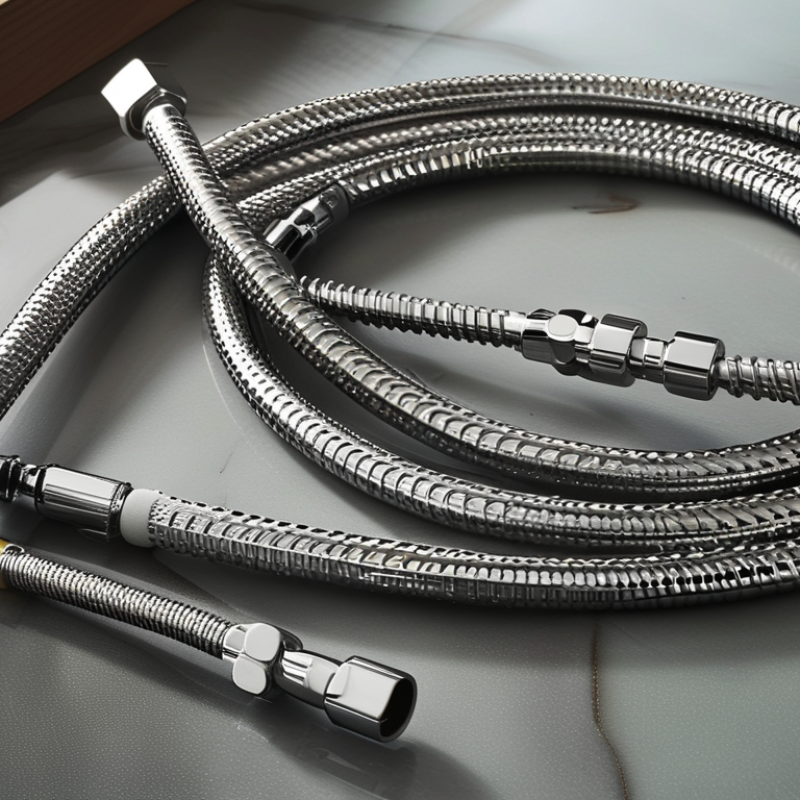
How to Choose the Right SS Shower Hose?

Define Your Shower Setup and Hose Connection Requirements

When choosing an SS shower hose, define your shower setup before comparing finishes or prices. Is it serving a handheld shower, sliding rail, or concealed outlet? Measure the distance from the outlet to your usual standing position. Add gentle slack, not a large loop. A hose that is too short pulls at the fitting. One that is too long drags across the floor.

Connection details matter more than appearance. Check both ends. Confirm the thread size, gender, and sealing method. Many shower hoses use standard connections, but older plumbing may differ. Do not force a nearly matching thread. It can damage the fitting and cause a slow leak. Confirm whether your shower needs two female ends or an adapter. Washers should sit flat inside the nuts. Hand-tighten first, then apply light tool pressure only if necessary.

Consider movement and maintenance. Flex it gently. A tightly coiled hose may look neat, yet resist a handheld shower’s natural drop. Stainless steel outer coils protect the hose, but the inner tube, crimping, and end fittings also affect durability. Ask a reliable supplier for temperature and pressure ratings. I once chose by length alone. That was a poor shortcut. After installation, run the shower for several minutes and check each joint with dry tissue. Small drips are easy to miss.

Compare Stainless Steel Grades, Flexibility, and Protective Finishes

How to Choose the Right SS Shower Hose?

Stainless steel grade affects corrosion resistance, durability, and maintenance. Grade 304 suits most indoor bathrooms with ordinary water. Grade 316 contains molybdenum, which improves resistance to chloride exposure. The Nickel Institute identifies this advantage in its technical guidance on stainless steel corrosion. It matters more near coasts or where cleaning products leave salty residue. Check the water first. Grade alone is not enough.

The World Stainless Association reported 58.4 million metric tonnes of crude stainless steel production in 2023. That scale supports stainless steel’s established industrial reliability, but it does not guarantee every hose performs equally. Inspect the braid closely. A tight, even braid usually protects the inner tube better. A smaller bend radius improves handling around a hand shower, yet excessive bending can damage fittings. Some manufacturers publish bend-cycle data; many do not. That gap deserves attention.

Protective finishes also change daily use. Polished surfaces resist visible staining, while brushed finishes hide small scratches more effectively. PVC-coated hoses feel softer and protect nearby fixtures, but coatings may age under heat and repeated twisting. Electro-polished stainless steel can provide a smoother, cleaner surface, although finish quality varies. Look for clear material specifications and compliance references, such as EN 1113 where applicable. My practical preference is 316 for humid, coastal bathrooms and 304 for typical interiors. It is not a perfect rule. Water chemistry can overturn it.

Check Hose Length, Thread Compatibility, and Pressure Ratings

How to Choose the Right SS Shower Hose?

Length and thread compatibility should be checked before appearance. Measure from the outlet to the hand shower, then add gentle slack. A 1.5-meter hose often suits a standard shower area, while a 2-meter model gives better reach for seated use. Avoid sharp bends near the fittings. I once treated thread fit as a minor detail. It was not. A G1/2 connection is common, but thread profiles can still vary between regions and fixtures. Never force a connection that feels tight immediately.

Pressure ratings deserve equal attention. The hose should exceed your home’s maximum water pressure, not only its normal pressure. Many residential systems operate near 40–60 psi, but a pressure gauge gives more reliable evidence. Check the product’s working-pressure and temperature limits. ASME A112.18.1/CSA B125.1 and EN 1113 are useful references for plumbing fitting performance and shower hose testing. The U.S. EPA WaterSense specification limits certified showerheads to 2.0 gallons per minute, compared with the federal 2.5-gallon limit. Lower flow does not automatically mean lower hose pressure.

Tips: Inspect both sealing washers before installation. Hand-tighten first, then use minimal tool pressure. Test for leaks for several minutes. Stainless steel braiding looks strong, but the inner tube carries the water. That detail is easy to overlook. A flexible hose may still kink under heat or repeated movement, so reassess its bend after installation.

How to Choose the Right SS Shower Hose? — Check Hose Length, Thread Compatibility, and Pressure Ratings
Selection Dimension Common Options or Reference Values Recommended Check Why It Matters
Hose Length 1.2 m, 1.5 m, 1.8 m, and 2.0 m are commonly used residential lengths. Measure the distance between the outlet and the hand shower, then allow enough slack for comfortable movement. A hose that is too short restricts movement, while excessive length can create loops and increase the risk of kinking.
Thread Size G1/2 (1/2-inch BSP) is widely used for shower hose connections in many markets. Confirm the thread standard and nominal size on both the shower outlet and hand shower before ordering. Matching nominal sizes does not always guarantee compatibility because BSP and NPT threads use different profiles and are not directly interchangeable.
Connection Type Female-to-female swivel connections are common for hoses designed to connect a wall outlet to a hand shower. Check whether the hose ends require flat washers, conical washers, adapters, or a built-in seal. The correct connection and seal prevent leakage and reduce the need for excessive tightening.
Operating Pressure Many residential shower systems operate approximately between 1 and 5 bar, but actual pressure varies by building and installation. Choose a hose with a rated working pressure at or above the maximum pressure of the installation. Using a hose below the system pressure rating can shorten service life and increase the risk of leakage or failure.
Pressure Rating Compare the hose's declared working pressure and burst pressure; do not use burst pressure as the normal operating limit. Do not select a product based only on a high burst-pressure figure. Verify the working-pressure rating and test conditions. Working pressure indicates the intended continuous-use limit, whereas burst pressure describes failure resistance under a separate test condition.
Temperature Rating Domestic hot-water systems commonly deliver water below 60°C, but the actual temperature depends on the water heater and controls. Select a hose whose maximum temperature rating exceeds the highest temperature expected in the installation. Repeated exposure to temperatures above the hose rating may damage seals, inner tubes, or surface finishes.
Hose Material Stainless-steel outer braiding is commonly paired with a flexible polymer inner tube and elastomer seals. Check the grade and construction details stated by the supplier, including the inner tube and seal materials. The outer braid provides mechanical protection, while the inner tube and seals directly affect water compatibility and service life.
Flexibility and Kink Resistance Double-interlock or similarly reinforced braiding can improve flexibility and resistance to deformation. Look for smooth bending, a freely rotating swivel, and no sharp flattening when the hose is gently curved. A kinked hose can restrict flow, stress the connections, and accelerate wear of the inner tube.
Seal and Washer Design Flat rubber or elastomer washers are commonly used in shower hose connections. Install the correct washer at each sealing face and tighten by hand before using a suitable tool only if necessary. Most shower hose joints seal at the washer rather than at the thread. Over-tightening can damage the washer or connector.
Installation Environment Indoor bathrooms, exposed shower areas, hard-water regions, and installations with frequent bending have different demands. For humid or hard-water environments, prioritize corrosion-resistant external materials and inspect the hose regularly. Moisture, mineral deposits, cleaning chemicals, and repeated flexing can affect the braid, finish, seals, and connections.
Standards and Documentation Product documentation may specify thread standard, working pressure, temperature range, materials, and applicable plumbing requirements. Request a complete technical datasheet instead of relying only on product photographs or nominal dimensions. Documented ratings make it easier to verify compatibility and compare products on a consistent basis.
Final Compatibility Checklist Correct length, matching thread standard, suitable connection ends, adequate working-pressure rating, and suitable temperature rating. Confirm all five items before installation and inspect for leaks after the water supply is restored. A hose is suitable only when its dimensions, connections, materials, and performance ratings match the complete shower system.

Evaluate Durability, Cleaning Needs, and User Safety Features

How to Choose the Right SS Shower Hose?

A stainless steel shower hose should feel flexible without collapsing under pressure. Look for a tightly woven outer braid with smooth, rounded edges. Sharp wire ends can scratch wet hands or catch on skin. The inner tube matters too. A corrosion-resistant material helps prevent cracking when the hose repeatedly bends. In my experience, a slightly heavier hose often feels stronger, but weight alone does not prove quality. Check the connectors, washers, and crimped ends carefully.

Cleaning needs can change your choice. A smooth surface collects less soap residue than a deeply ridged design. After use, wipe the hose with a soft cloth and leave it loosely hanging. Avoid harsh scouring pads, which may damage the protective finish. Remove mineral buildup early, especially near the showerhead connection. A few dull spots are not always dangerous, but they deserve inspection. I once ignored a small leak because it seemed harmless. It later soaked the floor and created a slipping risk.

User safety depends on more than stainless steel. Choose anti-kink protection near both ends, secure swivel fittings, and flexible connections that do not twist suddenly. Check that the hose stays stable when pulled lightly. Smooth connectors are safer for children, older adults, and users with limited grip strength. Replace the hose if you notice bulges, exposed inner tubing, loose fittings, or repeated leaks. No hose lasts forever. That part is easy to forget.

How to Choose the Right SS Shower Hose?

Scores use a 1–5 scale, where 5 indicates stronger performance. A 316 stainless-steel hose generally offers the best corrosion resistance, while a 304 stainless-steel hose provides a balanced combination of durability, cleaning convenience, and cost. A smooth outer surface, flexible construction, and anti-twist protection can improve hygiene and user safety.

Select a Reliable Hose Based on Quality, Warranty, and Budget

Choosing the Right SS Shower Hose: Quality, Warranty, and Budget

A stainless steel shower hose should feel flexible, firm, and evenly finished. Check the outer coils for sharp edges, loose winding, or visible gaps. The inner tube matters too. Look for materials designed for hot water, pressure changes, and repeated bending. Product specifications should clearly state the steel grade, connection size, working pressure, and temperature range. Stainless steel appearance alone proves little.

I once chose a cheaper hose because its surface looked polished. It leaked near the fitting after several months. That experience changed my buying method. Now, I inspect the connectors, washers, and crimped ends carefully. Brass or reinforced fittings may improve durability, but only when they are properly assembled. A hose that kinks beside the shower mixer deserves caution. Small stress points often become larger leaks.

Warranty terms reveal how seriously a manufacturer supports its product. Read the coverage period, proof-of-purchase rules, and exclusions for installation damage or improper use. A longer warranty is useful, but clear conditions matter more. Keep the invoice and installation details. They may be needed later. For a limited budget, compare the total cost, not only the shelf price. A slightly higher-quality hose can reduce replacement work and water damage risks. Still, premium claims should have testing details behind them. Without evidence, the extra cost may be difficult to justify.

FAQS

: How should I choose the correct shower hose length?

: Measure from the outlet to your normal standing position. Add gentle slack. A 1.5-meter hose suits many standard shower areas. A 2-meter hose offers more reach. Too short pulls fittings. Too long may drag across the floor.

Which stainless steel grade suits a shower hose?

Grade 304 suits most indoor bathrooms with ordinary water. Grade 316 handles chloride exposure better. It may suit coastal bathrooms or salty cleaning residue. Grade alone is not decisive. Water chemistry can change the result.

What connection details should I check?

Check thread size, thread gender, and sealing method on both ends. Many hoses use G1/2 connections, but fixtures can vary. Confirm whether you need two female ends or an adapter. Never force a tight thread.

How do I prevent leaks during installation?

Place each washer flat inside its nut. Hand-tighten the connection first. Use only light tool pressure when necessary. Run the shower for several minutes. Dry tissue can reveal small drips.

What pressure rating should a shower hose have?

Choose a hose rated above your home’s maximum water pressure. Normal household pressure may range around 40–60 psi. A pressure gauge gives better evidence. Check both working-pressure and temperature limits. This detail is easy to miss.

Does flexibility affect hose performance?

Yes. A flexible hose should follow the hand shower’s natural drop. Avoid sharp bends near the fittings. A tight coil may resist movement. Repeated twisting can damage the inner tube or crimped ends. Flexible does not mean indestructible.

What should I inspect in the stainless steel braid?

Look for a tight, even braid without obvious gaps. The braid protects the inner tube. However, the inner tube and end fittings also control durability. Bend-cycle data is useful when available. Many products provide little detail here.

Which protective finish is practical?

Polished surfaces make staining more visible. Brushed surfaces can hide small scratches. PVC coatings feel softer and protect nearby fixtures. Heat and twisting may age the coating. A smoother finish may clean easily, but finish quality still varies. Looks can mislead.

What mistakes should I avoid when selecting a hose?

Do not choose by length or appearance alone. Check threads, ratings, washers, and bend behavior. I once treated thread compatibility as minor. That was a poor shortcut. Test every joint after installation. Small leaks often hide quietly.

Conclusion

Choosing the right Ss Shower Hose starts with understanding your shower setup, including the connection type, available space, and preferred hose length. Confirm that the threads match your showerhead and water outlet, and select a hose with a pressure rating suitable for your plumbing system. Stainless steel grades can affect strength, corrosion resistance, and appearance, while protective finishes may improve durability and simplify cleaning. A flexible design is also important for comfortable daily use without excessive twisting or kinking.

When comparing options, consider long-term reliability, user safety, and maintenance needs. A smooth, easy-to-clean surface can help reduce buildup, while secure fittings and a well-designed exterior can improve handling. Balance material quality, performance, warranty coverage, and overall cost rather than choosing solely by price. By evaluating these factors together, you can select an Ss Shower Hose that offers dependable water flow, practical flexibility, lasting performance, and good value for your bathroom.


Isabella

Isabella

Isabella is a dedicated marketing professional with a sharp focus on driving brand growth and engagement through strategic content creation. With an extensive background in digital marketing, she combines her passion for storytelling with her keen understanding of industry trends to deliver......