Choosing a China Best RV Shower Hose Supplier requires more than comparing prices or polished product photos. The right supplier should understand pressure, temperature, fittings, material safety, and long-term campground use. RVIA reported 342,220 wholesale RV shipments in 2024, showing a large and active replacement market. More RV owners also expect practical upgrades, including stronger bathroom hardware and easier maintenance.
Mark Polk, an RV maintenance educator, says, “Inspect before you replace.” That advice fits every Rv Shower Hose purchase. Examine the hose after each trip. Look for swelling, surface cracks, stiff bends, and leaking connectors. A hose that feels soft today may fail beside a campsite tomorrow. Small details matter.
Reliable suppliers should provide material specifications, pressure-test records, fitting dimensions, and consistent batch control. Ask whether the hose uses potable-water-safe materials where required. Request samples before ordering thousands. Check the inner diameter, thread type, end length, and washer quality. These details can prevent costly returns.
Industry data supports careful sourcing. The RV Industry Association’s shipment reports show sustained demand for replacement components. NSF guidance also highlights the importance of materials intended for drinking-water contact. However, not every shower hose needs the same certification. Requirements depend on design and use.
There is no perfect hose.
A responsible China supplier should welcome testing, explain limitations, and provide traceable documentation. This guide will examine factory experience, quality systems, customization ability, packaging, lead times, and after-sales support. Some buyers focus too heavily on unit price. That is understandable, but it can be a costly mistake.
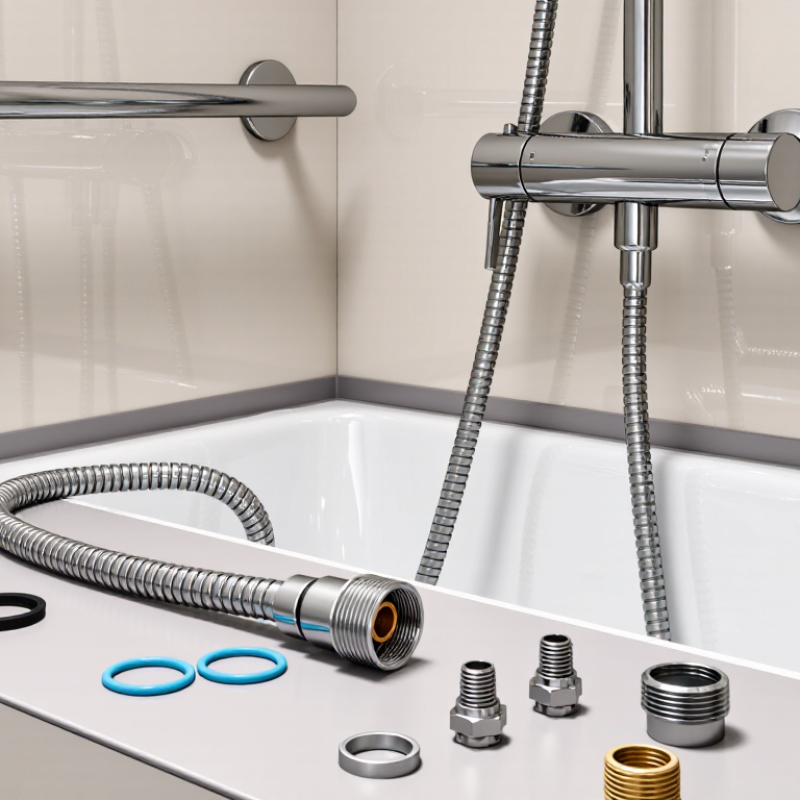
Define the RV shower hose by connection, pressure, and flow before comparing suppliers. Most RV shower assemblies use 1/2-inch connections, but thread type and gender still require confirmation. A 1/2-inch connection does not guarantee compatibility. Check the fitting, gasket, and sealing method together. During field fitting, I have seen leaks caused by mismatched threads, not poor hose materials.
Pressure must be measured dynamically, while water is running. Static pressure can look acceptable, yet the shower becomes weak after the pump starts. Many RV systems operate near 40–60 psi, but the vehicle manual should control the final limit.
The U.S. Environmental Protection Agency’s WaterSense showerhead specification limits flow to 2.0 gallons per minute at 80 psi. Federal showerhead standards commonly reference 2.5 gallons per minute at 80 psi. These figures help comparison, but they are not a promise of RV performance. Hose length, pump capacity, bends, and filters reduce real flow.
Tips: Confirm 1/2-inch thread details. Test flow at the shower outlet. Ask for pressure-test records and material data. A hose rated far above your system is useful, but excessive stiffness can make a small bathroom frustrating. I once focused too much on maximum pressure and overlooked flexibility. That choice was technically safe, but inconvenient. Select a supplier that provides clear tolerances, leak-test procedures, and batch traceability. Reliable documentation is often more valuable than attractive packaging.
China Best RV Shower Hose Supplier: How to Choose?
Compare Materials and Safety: PVC, EPDM, and NSF/ANSI/CAN 61 Compliance
Choosing an RV shower hose starts with water contact, not appearance. PVC hoses are lightweight, flexible, and usually economical for occasional outdoor use. However, some PVC compounds may become stiff in cold weather or release a noticeable plastic smell. Check the formulation carefully. A low price can hide weak reinforcement, poor fittings, or uncertain material records.
EPDM handles heat, sunlight, ozone, and repeated bending better in demanding conditions. It often feels softer and more stable during installation. Yet, EPDM is not automatically suitable for drinking water. Its safety depends on the exact formulation, manufacturing process, and testing evidence. Ask the supplier for temperature ratings, pressure data, migration results, and batch traceability.
Safety needs closer attention. NSF/ANSI/CAN 61 evaluates materials and components that contact drinking water. A hose should carry documentation covering its actual use, not only a general material statement. Verify the certified product range, temperature limits, and connection materials. Look for evidence involving lead and other regulated substances. Do not trust a printed logo alone.
Small details matter. Inspect the inner wall for cracks, rough seams, or unusual odor. Bend the hose by hand and examine the fittings. I once underestimated fitting quality; the tube looked excellent, but the connection leaked after repeated movement. That mistake is worth remembering. Supplier reliability also depends on clear test reports, consistent production, and responsive technical support.
| Evaluation Dimension | PVC Shower Hose | EPDM Shower Hose | NSF/ANSI/CAN 61-Compliant Hose |
|---|---|---|---|
| What It Is | A hose made from polyvinyl chloride, commonly supplied as a flexible or reinforced construction. | A hose made from ethylene propylene diene monomer rubber, usually selected for demanding temperature and weather conditions. | Not a separate polymer. It is a hose or hose assembly whose wetted materials have been evaluated and certified for applicable drinking-water-contact requirements. |
| Typical Material Construction | Flexible PVC tube, often with textile reinforcement, a PVC cover, or a multilayer structure. | EPDM tube and cover, commonly with textile, polyester, or other reinforcement depending on pressure requirements. | May use PVC, EPDM, thermoplastic elastomer, or other materials, provided the exact formulation and finished product meet the applicable certification scope. |
| Typical Continuous Temperature Range | Approximately 0 to 60°C (32 to 140°F) for many flexible PVC hoses. The actual limit depends on formulation, reinforcement, and pressure. | Approximately −40 to 120°C (−40 to 248°F) for many EPDM hose compounds. The actual limit must be confirmed for the finished hose. | Compliance does not define the hose temperature rating. Use the temperature rating stated for the specific certified product. |
| Hot-Water Performance | Acceptable for moderate-temperature use when specifically rated; flexibility and pressure capacity can decrease as temperature rises. | Generally strong hot-water and steam-aging resistance compared with standard flexible PVC. | Depends on the base material and product design; certification and temperature rating must both be checked. |
| Cold-Temperature Flexibility | May become stiff or brittle near and below freezing, particularly when plasticizer content and formulation are not optimized. | Generally retains flexibility better in cold environments, subject to the compound and reinforcement used. | Depends on the certified hose material and its stated operating range. |
| Flexibility and Handling | Usually lightweight and easy to handle; suitable for compact RV shower installations when properly supported. | Flexible but may feel heavier or less soft than PVC because of rubber construction and reinforcement. | Must be judged from the certified product's minimum bend radius, stiffness, weight, and construction. |
| Resistance to Ozone and Weathering | Moderate to limited resistance depending on formulation; prolonged sunlight and outdoor exposure can accelerate aging. | Very good resistance to ozone, sunlight, weathering, and many outdoor-aging conditions. | Not determined by certification alone; select a hose with a suitable weathering and UV-resistance specification. |
| Resistance to Common Chemicals | Generally suitable for water and many mild aqueous solutions, but compatibility varies with solvents, oils, and disinfectants. | Good resistance to water, dilute acids, alkalis, and many cleaning chemicals; generally poor compatibility with petroleum oils and fuels. | Review the manufacturer's chemical-compatibility data because certification does not guarantee resistance to every chemical. |
| Odor and Taste Considerations | Odor or taste can occur if unsuitable plasticizers, additives, pigments, or processing residues are used. | Can provide low-odor water contact when a suitable potable-water compound is used; not every EPDM formulation is suitable for drinking water. | The applicable certification evaluates regulated extraction or leaching requirements within its defined scope; verify the certificate for the exact product. |
| Plasticizer and Additive Risk | Formulation-dependent. Ask for confirmation that restricted substances and unsuitable plasticizers are not used for potable-water applications. | Does not normally rely on PVC-type plasticizers, but pigments, curing agents, and other additives still require formulation control. | A valid certification provides stronger evidence that the evaluated product meets applicable material-extraction requirements. |
| Pressure Capability | Commonly suitable for low- to medium-pressure RV plumbing when reinforced and correctly rated. | Can provide strong pressure and temperature performance when reinforced and properly designed. | Certification does not replace pressure testing. Check working pressure, burst pressure, and temperature derating for the finished assembly. |
| Kink Resistance | Good in reinforced designs; a thin, soft PVC hose can flatten or kink when sharply bent. | Generally good resilience, but kink performance depends on wall thickness, reinforcement, and bend radius. | Compare the manufacturer's minimum bend radius and kink-resistance test data; certification alone does not indicate kink resistance. |
| Connection and Sealing Compatibility | Compatible with common RV hose fittings when the inner diameter, wall thickness, clamps, and temperature rating are correct. | Requires fittings and seals compatible with rubber hose dimensions and compression characteristics. | Confirm that certification covers the complete hose assembly, including liners, fittings, adhesives, lubricants, and sealing components where applicable. |
| NSF/ANSI/CAN 61 Status | PVC material alone is not proof of compliance. The exact formulation, hose construction, and intended use must be evaluated. | EPDM material alone is not proof of compliance. Only the exact potable-water product and certification scope should be accepted. | Designed for drinking-water-contact applications when the exact product is certified by an accredited organization and listed for the intended use. |
| What to Request from a Supplier | Material specification, plasticizer/additive declaration, working-pressure chart, temperature rating, migration test data, and production quality records. | EPDM compound specification, potable-water suitability statement, working-pressure chart, temperature rating, chemical-compatibility data, and quality records. | Current certificate or listing, certification number or searchable listing, product identification, size range, temperature and pressure scope, and confirmation that all wetted components are covered. |
| Best-Fit RV Application | Cost-sensitive shower connections, indoor routing, and moderate-temperature service where flexibility and low weight are priorities. | Frequent outdoor exposure, larger temperature swings, long service life, and applications where weathering resistance is important. | Fresh-water or potable-water systems where documented material safety and regulatory acceptance are more important than selecting a polymer by name alone. |
| Primary Advantages | Lightweight, economical, widely available, and easy to process into multilayer or reinforced hose designs. | Strong temperature performance, excellent weather and ozone resistance, and good long-term rubber resilience. | Provides documented evidence for applicable drinking-water-contact requirements when the certificate covers the exact product. |
| Primary Limitations | Cold-temperature stiffness, possible additive migration, and reduced durability under unsuitable UV, heat, or chemical exposure. | Usually higher cost and weight than basic PVC; poor compatibility with petroleum-based oils and fuels. | Certification may increase cost and does not automatically prove pressure, UV, bend, or whole-assembly performance outside its stated scope. |
| Recommended Selection Priority | Choose only when the temperature, pressure, UV exposure, and water-contact requirements are clearly within the product specification. | Choose when durability, outdoor exposure, temperature cycling, or hot-water performance is a major concern. | For potable-water RV shower systems, prioritize a certificate covering the exact hose assembly, then verify pressure, temperature, bend radius, fittings, and installation conditions. |
Note: Temperature ranges, pressure ratings, bend radii, and certification scopes vary by construction and manufacturer. NSF/ANSI/CAN 61 compliance applies to the specific evaluated product and intended use; it is not automatically granted to every hose made from PVC or EPDM.
Choosing a China RV shower hose supplier requires more than comparing price.
Request tested working pressure, temperature range, and minimum bend radius. These figures reveal how the hose behaves behind a tight shower panel.
EN 1113:2015 includes pressure testing requirements for shower hoses, with applicable test levels reaching 1.5 MPa. However, test pressure is not working pressure. Ask suppliers to state both values clearly.
A neat data sheet can still hide a weak hose.
Temperature claims also need context. Check whether the range applies to continuous water flow, short exposure, or storage.
ISO 1307:2008 helps verify hose dimensions and tolerances, while ISO 10619-1:2011 provides recognized bending test methods.
Request the actual bend radius in millimeters, not “flexible” as a sales phrase.
Field installers often discover failure where the hose folds near a connector. That detail matters.
Tips:
Ask for batch-level test records, not only a catalog certificate. Compare pressure, heat, and bending results under the same test conditions.
Check whether fittings were tested with the hose. If the supplier cannot explain aging, repeated bending, or cold-weather performance, pause the purchase.
I would also test a sample in a real RV compartment, because laboratory figures may not reflect cramped installation.
China Best RV Shower Hose Supplier: How to Choose?
Auditing a Chinese RV shower hose supplier starts with ISO 9001 evidence. The ISO Survey 2022 recorded more than 1.26 million valid ISO 9001 certificates worldwide. Certification still does not guarantee reliable hose quality. Check the certificate scope, factory address, expiry date, and audit body. Ask to review inspection procedures for thread accuracy, rubber hardness, braid strength, and leak testing. A genuine factory should show batch records, not only polished photographs.
Factory capacity must match your seasonal demand. The RV Industry Association’s 2023 year-end report recorded 313,174 wholesale RV shipments. That volume can pressure small suppliers during peak months. Visit the production floor, or request a live video audit. Count extrusion lines, braiding machines, assembly stations, and test benches. Ask for monthly output, current orders, defect rates, and backup equipment. Numbers should connect with physical evidence.
MOQ and lead time require written details. Confirm whether the MOQ applies to each color, connector type, or total order. Request a schedule covering sampling, tooling, production, inspection, and export preparation. For standard hoses, a supplier may quote 15–30 days, but custom fittings can extend the timeline. I once trusted a “fast delivery” promise and ignored packaging capacity. The delay came later. That mistake still matters. Include approval samples, inspection points, and delay remedies in the purchase agreement.
A practical supplier-audit framework for comparing ISO 9001 evidence, factory capacity, MOQ flexibility, and lead-time reliability before placing an RV shower hose order.
The chart uses a balanced 100-point procurement model: quality-system evidence receives the highest weighting, while capacity, MOQ, and delivery performance are also checked to reduce supply risk. Buyers should verify certificates, production records, order quantities, and recent delivery data directly with each supplier.
When choosing a China RV shower hose supplier, do not judge quality from photos alone. Request production samples before discussing large quantities. Inspect the fittings, thread accuracy, surface finish, and hose flexibility by hand. A reliable supplier should explain material grades, pressure limits, and suitable temperature ranges clearly.
Test each sample under realistic conditions. Connect it to an RV shower fitting, apply working pressure, and leave it running for at least 30 minutes. Bend the hose near both connectors, where leaks often begin. Repeat the test with hot and cold water cycles.
Check for dripping, swelling, odor, and loose crimping. Keep photos, pressure readings, and test dates in one file. Small records become useful evidence later.
I once trusted a clean-looking sample too quickly. That was a mistake.
Calculate the total cost, not only the unit price. Include replacement washers, special fittings, inspection fees, freight, and possible failed samples. Read the warranty carefully. Confirm its length, claim process, evidence requirements, and exclusions for installation damage.
Ask for traceable CSA records when the destination or project requires CSA compliance. The document should identify the exact model, test scope, and validity details. A generic certificate is not enough.
Suppliers with practical testing experience usually answer technical questions without vague promises. Still, verify their claims through independent inspection when the order is important. A cheaper hose may become expensive after one hidden leak.
Confirm the 1/2-inch size, thread type, fitting gender, gasket, and sealing method. The size alone is insufficient. Mismatched threads can cause leaks, even with strong hose material.
Measure pressure while water runs, not only when the system is idle. Many RV systems operate around 40–60 psi. Follow the vehicle manual for the final pressure limit. A high rating helps, but stiffness may reduce comfort.
Test flow directly at the shower outlet with the pump operating. Hose length, bends, filters, and pump capacity can reduce actual flow. Published figures are comparison tools, not guarantees.
Request working pressure, test pressure, temperature range, and test conditions. Ask whether temperature claims cover continuous use, short exposure, or storage. A tidy data sheet can still hide weak performance.
The hose may fold behind a narrow shower panel or near a connector. Request the bend radius in millimeters. “Flexible” is too vague. Test the hose inside a real compartment.
Connect the sample to an RV fitting and run it under working pressure for 30 minutes. Bend both connector areas during testing. Use hot and cold water cycles. Check for dripping, swelling, odor, and loose crimping.
Request batch-level pressure tests, material data, leak-test procedures, and traceability records. Keep photos, pressure readings, and test dates together. Generic certificates are not enough. The document should identify the exact model and test scope.
Include washers, special fittings, inspection fees, freight, and replacement samples. Read warranty length, evidence requirements, claim steps, and installation exclusions. A cheaper hose may become expensive after one hidden leak.
Do not focus only on maximum pressure or attractive packaging. I once overlooked flexibility while choosing a technically safe hose. It worked, but the small bathroom became frustrating. That choice needed more practical testing.
Choosing the right Rv Shower Hose requires more than comparing prices. First, confirm that the hose uses compatible 1/2-inch connections and can support the required water pressure and flow rate for your recreational vehicle. Evaluate construction materials such as PVC and EPDM based on flexibility, durability, odor control, and resistance to heat, chemicals, and repeated bending. For drinking-water-related applications, request evidence of NSF/ANSI/CAN 61 compliance and other relevant safety documentation.
When assessing Chinese suppliers, review ISO 9001 certification, manufacturing capacity, quality-control procedures, minimum order quantities, and realistic lead times. Ask for complete performance data, including working pressure, temperature range, and minimum bend radius. Before placing a large order, test samples for leaks, connection reliability, flexibility, and long-term performance. Finally, compare the total cost, including tooling, packaging, shipping, warranty support, testing, and certification records such as CSA documentation, rather than focusing only on the unit price.

XuanYu Sanitary