Choosing the right Pvc Shower Hose can improve daily comfort, water control, and bathroom reliability. For global buyers, the decision involves more than price or attractive packaging. Material quality, connector compatibility, hose length, flexibility, and leak resistance deserve careful attention.
This guide reviews ten practical options for different markets and installation needs. Each product should be assessed through visible construction details, supplier information, and realistic user feedback. A strong hose should bend smoothly without flattening, connect securely to standard fittings, and resist cracking after repeated use. The inner tube also matters, especially when water pressure changes during showers. Some models feel soft and flexible in the hand, while others remain firm and may resist twisting better. Small differences can become important after months of daily use.
We also consider packaging quality, replacement support, and documentation from manufacturers. These details help buyers compare products more confidently across regions. However, no shortlist is perfect. Local plumbing sizes and product requirements can vary, so buyers should verify specifications before ordering. That step is easy to overlook. A lower-cost Pvc Shower Hose may appear practical, yet weak threads or a poor seal can create frustrating leaks. Our selection aims to balance durability, usability, value, and supplier transparency. It is not a substitute for checking local requirements. Experiences may differ, but careful comparison usually leads to a safer and more satisfactory purchase.
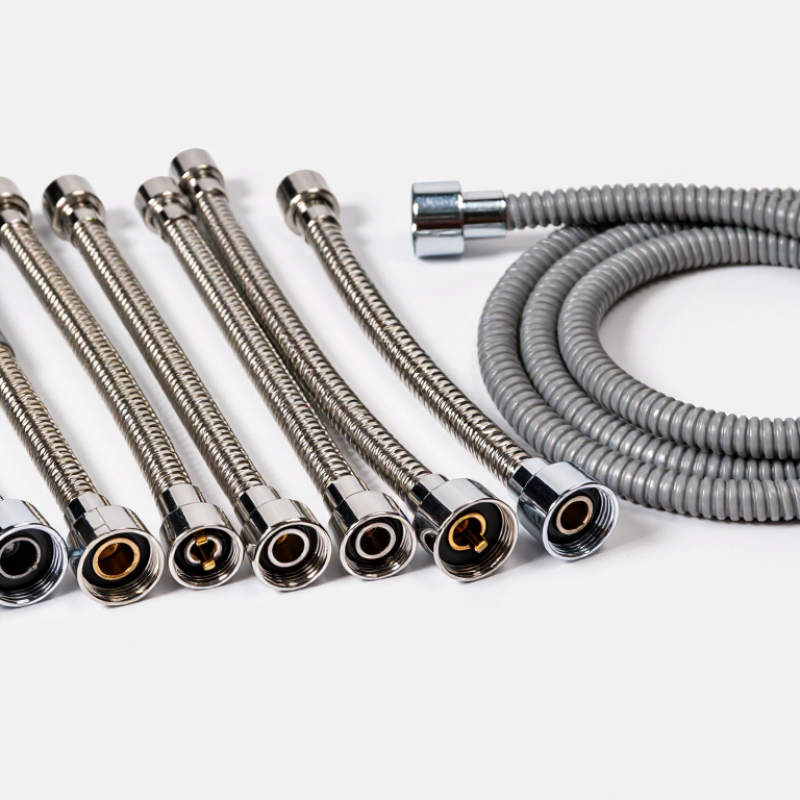
PVC shower hoses are flexible water conduits designed for handheld shower systems. Their main applications include homes, hotels, rental apartments, gyms, hospitals, and accessible bathrooms. The material is lightweight, resistant to everyday moisture, and usually easier to handle than metal tubing. It can also reduce surface scratching around a shower holder.
In practical inspections, I check the hose length, inner diameter, wall thickness, and fitting quality. A 1.5-meter hose suits most standard bathrooms, while longer versions help users with limited mobility. The connectors should match the shower valve and handset thread precisely. Small gaps can cause leaks.
Temperature and pressure ratings require careful attention. Hot water can harden or deform poorly formulated PVC. Reinforced layers improve stability, but they do not make every hose suitable for continuous high heat. Buyers should request test reports, material information, and batch inspection records from suppliers. Local plumbing requirements still matter.
PVC hoses serve more than ordinary household showers. Hotels use them for frequent guest turnover, while hospitals may install them beside adjustable shower seats. Fitness centers often need flexible hoses for quick rinsing after exercise. Outdoor wash areas can use them temporarily, although prolonged sunlight may shorten service life. I have seen attractive hoses fail because their fittings corroded first. Appearance is not enough. A better purchasing decision considers bending cycles, odor, cleaning routines, and replacement access.
The best PVC shower hoses are defined by performance, not surface shine. In practical sourcing, I check flexibility, bend recovery, connector strength, and internal smoothness. A hose should curve beside the mixer without flattening or twisting. That detail affects water flow and cleaning. Grand View Research estimated the global PVC market at about USD 45.5 billion in 2023, but material scale does not guarantee product quality. Formulation matters. Reliable specifications should identify PVC grade, reinforcement, operating temperature, working pressure, and burst pressure. They should also address odor and chemical migration. A glossy finish can hide weak reinforcement.
EN 1113 provides a useful reference for sanitary tapware shower hoses, including dimensional and performance expectations. Independent testing should include pressure cycling, repeated bending, torsion, and pull-off resistance. These tests better reflect hotel bathrooms, family homes, and frequent commercial use. PlasticsEurope reported global plastics production of 400.3 million tonnes in 2022. That figure shows the industry’s scale, yet sustainability claims still need evidence. Recycled content may reduce impact, but it can also affect flexibility and cleanliness if poorly controlled. This is where buyers must question assumptions.
Tips: Request a complete test report, not only a certificate photo. Compare hose length under tension. Check whether connectors are brass, stainless steel, or plated alloy. Inspect threads and sealing washers. Ask for batch traceability and sample approval. I would also test several samples before bulk purchasing. One sample can mislead. A strong hose should feel flexible, but not soft or sticky.
A practical comparison of PVC shower-hose configurations for different bathroom, installation, climate, and purchasing requirements.
| Rank | Shower Hose Profile | Outer Construction | Inner Tube | Common Lengths | Connection Size | Typical Operating Temperature | Typical Working Pressure | Key Distinguishing Feature | Recommended Application |
|---|---|---|---|---|---|---|---|---|---|
| 1 | Reinforced Premium PVC Hose | Multi-layer PVC with embedded polyester reinforcement | Flexible sanitary-grade PVC | 1.5 m, 1.8 m, 2.0 m | G1/2 female swivel connections | 0–60°C | Up to approximately 0.8 MPa, depending on construction | Good balance of flexibility, pressure resistance, and service life | General residential and hospitality bathrooms |
| 2 | Extra-Flexible Soft PVC Hose | Soft, smooth PVC with a low-stiffness formulation | Flexible PVC tube | 1.5 m, 1.8 m | G1/2 female swivel connections | 0–60°C | Typically 0.6–0.8 MPa | Easy bending with reduced resistance during hand-shower use | Compact bathrooms and adjustable hand showers |
| 3 | Smooth Anti-Limescale PVC Hose | Non-porous smooth PVC outer surface | Flexible PVC with a smooth internal passage | 1.5 m, 1.8 m, 2.0 m | G1/2 female swivel connections | 0–60°C | Typically 0.6–0.8 MPa | Fewer external grooves for easier wiping and reduced dirt accumulation | Hard-water regions and low-maintenance bathrooms |
| 4 | Double-Layer Reinforced PVC Hose | Outer PVC jacket with textile-reinforced inner layer | Pressure-resistant PVC | 1.5 m, 1.8 m, 2.0 m | G1/2 female swivel connections | 0–60°C | Typically 0.8–1.0 MPa | Higher resistance to expansion and pressure fluctuation | Buildings with variable water pressure |
| 5 | Long-Reach 2.0 m PVC Hose | Flexible PVC with abrasion-resistant outer surface | Flexible PVC tube | 2.0 m, 2.5 m | G1/2 female swivel connections | 0–60°C | Typically 0.6–0.8 MPa | Extended reach for seated bathing and wider shower areas | Accessible bathrooms, bathtubs, and family bathrooms |
| 6 | Compact 1.2 m PVC Hose | Lightweight flexible PVC | Flexible PVC tube | 1.2 m, 1.5 m | G1/2 female swivel connections | 0–60°C | Typically 0.6–0.8 MPa | Reduced length helps limit tangling in small shower enclosures | Compact apartments, cabins, and small shower stalls |
| 7 | High-Temperature PVC Hose | Heat-stabilized, multi-layer PVC construction | Heat-resistant PVC formulation | 1.5 m, 1.8 m | G1/2 female swivel connections | 0–70°C, subject to manufacturer testing | Typically 0.6–0.8 MPa | Greater temperature margin for hot-water installations | Regions with hot water systems and frequent high-temperature use |
| 8 | Kink-Resistant Coiled PVC Hose | Flexible PVC with spiral or coiled geometry | Flexible PVC tube | 1.5 m, 1.8 m | G1/2 female swivel connections | 0–60°C | Typically 0.6–0.8 MPa | Improved resistance to sharp bends and twisting during use | Hand showers that are frequently moved or stored |
| 9 | Lightweight Travel PVC Hose | Thin-wall flexible PVC with compact fittings | Flexible PVC tube | 1.2 m, 1.5 m | G1/2 female swivel connections | 0–60°C | Typically 0.5–0.7 MPa | Low weight and easy packing for temporary installations | Serviced apartments, temporary housing, and travel use |
| 10 | Universal-Fitting PVC Hose | Reinforced PVC with broad compatibility focus | Flexible PVC tube | 1.5 m, 1.8 m, 2.0 m | G1/2 female swivel connections with gasket compatibility | 0–60°C | Typically 0.6–0.8 MPa | Designed around the widely used G1/2 shower connection format | Replacement programs and international distribution |
Buyer’s note: Actual pressure, temperature, bend-radius, material, and compliance values vary by construction and production batch. Global buyers should confirm test reports, potable-water or sanitary-contact suitability where required, fitting dimensions, gasket type, packaging language, and applicable market requirements before placing an order.
How to Evaluate the 10 Best PVC Shower Hoses
Choosing among the 10 best PVC shower hoses requires more than comparing prices. Start with the hose structure, especially its inner tube, outer reinforcement, and connection points. A reliable hose should bend smoothly without flattening or cracking. I usually inspect a sample by making several tight loops by hand. Cheap PVC may feel stiff, sticky, or unusually thin. That is a warning sign.
Check the working pressure and temperature ratings carefully. These figures should match the intended water system, not just appear in a product listing. Examine the threaded fittings for clean machining and firm alignment. Loose connectors can leak behind a wall or around a handheld shower. Ask suppliers for material information, leak-test records, and relevant safety documentation for your destination market. Some details are easy to overlook. Packaging quality also matters because crushed coils may develop permanent bends during shipping. I have found that a good-looking hose can still fail when its fittings are poorly assembled.
Tips: Compare the hose length with the bathroom layout, leaving enough reach without creating excess loops. Request a pre-shipment sample when possible. Test bending, connection tightness, and water flow. Do not rely on color alone; surface appearance says little about service life. A balanced evaluation should consider flexibility, odor, wall thickness, fittings, testing evidence, and after-sales response. My own inspection process is not perfect, so repeated checks remain worthwhile.
This benchmark uses a 0–10 scoring scale for the practical factors global buyers should compare when evaluating PVC shower hoses. Higher scores indicate stronger buying value, including compatibility with standard G1/2 connections, suitable length options, kink resistance, leak prevention, temperature tolerance, flexibility, hygiene, durability, packaging efficiency, and compliance documentation. The scores are evaluation benchmarks rather than brand or company rankings.
10 Best PVC Shower Hoses for Global Buyers
Global buyers should treat standards as a safety filter, not a marketing label. Check the hose’s working pressure, temperature range, connector material, and chemical resistance. Requirements differ by destination, so request documents matching the target market. Relevant evidence may include material declarations, factory test reports, and third-party performance checks. Do not accept a generic “international standard” claim without a test number or issuing body. PVC quality also matters. Strong odor, uneven wall thickness, or exposed reinforcement can signal weak processing.
Size decisions should begin with the installation, not the catalog. Many shower systems use 1/2-inch connections, but thread profiles may differ between markets. Confirm whether the fittings are G1/2, NPT, or another specification. Common lengths range from about 1.2 to 2 meters. A longer hose improves reach but may twist more easily. Measure the shower area and leave enough slack for movement. Small details matter here.
Supplier reliability requires evidence over promises. Ask for production samples, batch traceability, inspection photos, and replacement procedures. A useful sample test includes repeated bending, hot-water exposure, connector leakage, and surface cracking. Keep records of results. It is tempting to choose the lowest quotation. That choice can become expensive after complaints, delays, or inconsistent batches. Still, no checklist is perfect. Recheck specifications before every large order, especially when the supplier changes materials or subcontractors.
When comparing PVC shower hoses for global buyers, installation deserves more attention than appearance. Measure the old hose, including its end fittings, before choosing a replacement. Thread standards can differ between regions and fixtures. Check the connector size and the supplied washer carefully. Turn off the water, seat the washer, and tighten each connection by hand. Do not force mismatched threads. Use a wrench only for a final, gentle adjustment. A short leak test can reveal trouble early. Run warm water for one minute, then inspect both ends with a dry tissue. I have found that a sharply bent hose often leaks before the PVC visibly splits.
Cleaning should be simple and regular. Wipe the hose weekly with a soft cloth and mild soap. For chalky deposits, use diluted white vinegar briefly, if the care instructions permit it. Rinse the surface thoroughly afterward. Never use abrasive pads, strong solvents, or boiling water. Keep it gentle. After use, let the hose hang loosely instead of pressing it against the wall. This reduces trapped moisture and repeated stress near the fittings. Every few weeks, check for stiffness, bulges, discoloration, and fine cracks. Small cracks matter. Replace the hose when damage appears, even if water still flows normally. PVC can fail internally before an obvious leak develops. Follow the product instructions and local plumbing guidance, especially where water temperature limits apply. I used to judge a hose by its shine; that was a poor maintenance habit. Now I record the installation date and inspect it during bathroom cleaning.
They connect handheld showers to water valves in homes, hotels, gyms, hospitals, and accessible bathrooms. They are lightweight and flexible.
A 1.5-meter hose fits many standard bathrooms. Longer hoses can improve reach near adjustable shower seats. Avoid unnecessary loops.
Bend the hose into several tight loops by hand. It should bend smoothly without flattening, cracking, or feeling unusually stiff. Check it twice.
Connectors must match the valve and handheld shower threads precisely. Small gaps can cause leaks around the connection. Alignment is critical.
Compare the hose ratings with the actual water system. Poorly formulated PVC may harden or deform under continuous high heat. Reinforcement is not everything.
Request material information, leak-test records, safety documents, and batch inspection records. Requirements may differ in each destination market. Paperwork supports better decisions.
They can serve temporary outdoor wash areas. Prolonged sunlight may shorten their service life and weaken the material. Shade helps.
Check length, inner diameter, wall thickness, odor, bending cycles, fittings, packaging, and water flow. Price alone misleads.
Crushed coils may develop permanent bends during shipping. Poorly assembled fittings may leak despite an attractive outer surface. Appearance can fool us.
No. Request a sample and test bending, connection tightness, and water flow. My inspection process can miss details, so repeated checks remain useful.
A Pvc Shower Hose is a practical and flexible connection used in bathrooms, shower systems, handheld sprayers, and other water-delivery applications. The best options combine reliable water pressure performance, flexibility, kink resistance, smooth inner surfaces, and durable connections. When comparing the 10 best Pvc Shower Hose choices, buyers should consider material quality, wall thickness, length, connector compatibility, temperature tolerance, leak resistance, and ease of handling. A well-designed hose should remain comfortable to use while maintaining stable performance during repeated daily operation.
For global buyers, purchasing decisions should also include suitable sizes, connection standards, packaging requirements, product testing, and supplier reliability. Clear technical specifications, consistent quality control, and responsive communication can help reduce sourcing risks. Proper installation is equally important: connections should be tightened carefully without excessive force, and the hose should not be sharply bent or twisted. Regular rinsing, gentle cleaning, and periodic inspection can remove buildup and identify wear early, helping extend service life and maintain safe, dependable performance.

XuanYu Sanitary